
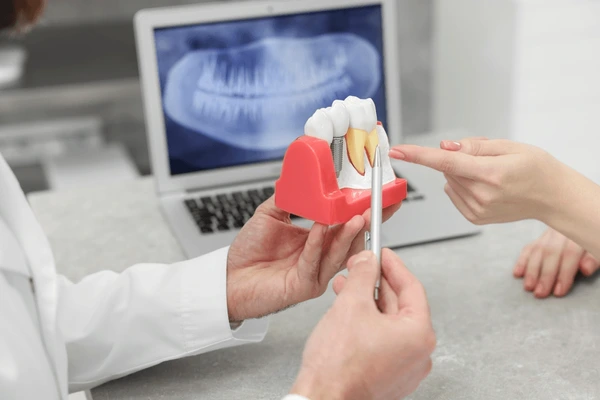
Introduction
When a tooth goes missing, the gap is usually the first thing people notice – it’s visible when they smile.
Dentists often see the situation differently. A missing tooth affects more than what appears in the mirror.
Teeth work together as a system. Each tooth helps distribute pressure during chewing, supports bite alignment, and contributes to the overall function of the mouth.
When one tooth disappears, the effects can extend beyond the empty space itself. Sometimes those changes happen gradually.
This is one reason dental implants in Kansas City, MO, are often recommended when a tooth is lost.
The goal isn’t simply to fill a gap; it’s to restore a missing part of a larger system.
In this blog, we’ll explore how dental implants work, why replacing a missing tooth is about more than appearance, and how implants support long-term oral health.
Why Replacing a Missing Tooth Is About More Than Filling a Gap
People often adapt surprisingly quickly when they lose a tooth:
- They chew on the opposite side of their mouth.
- They don’t eat certain foods.
- They learn to smile without drawing attention to the void.
These changes may make the tooth replacement appear less pressing. The problem is that adaptation is not the same thing as restoration.
Your teeth are designed to work together.
Each one helps absorb and distribute the forces generated in chewing. When a tooth is lost, other teeth can be put under more strain. Bite patterns may change gradually as the mouth compensates for the missing structure.
Dental implants are designed to address those broader concerns by replacing both the visible tooth and the support beneath it.
How Does the Dental Implant Process Work?
1. Consultation and Assessment
The initial step is to understand the patient’s oral health goals and treatment preferences. Your dentist in Kansas City, MO, will evaluate your teeth, gums, bite, and jawbone, and discuss any concerns and expectations. Treatment planning often involves digital imaging to obtain detailed information.
2. Planning of the individual treatment
Each implant case is unique. The dentist will then develop a customized treatment plan considering the location of the missing tooth, available support structures, oral health conditions, and long-term goals. Thoughtful planning results in a predictable treatment experience.
3. Placing Implants
The implant is inserted into the jawbone where the tooth was missing. This appliance is generally made of titanium and acts as an artificial tooth root, providing the base for the future restoration.
4. Integration and Healing
After placement, the implant needs time to heal. During this stage, the jawbone gradually fuses to the implant, creating the stability required for long-term support. Patients may not notice changes during this time, but it is one of the most important stages of treatment.
5. The Final Restoration
Once the healing is complete, a custom-made crown is placed on the implant. The restoration is intended to restore appearance and function, blending naturally with the surrounding teeth. For many patients, this is the time the missing tooth finally feels replaced.
At A Glance
| Who Qualifies? | The ideal candidates for this treatment are healthy adults with missing teeth and adequate jawbone volume. |
| Process Overview | Step 1
Your implant treatment starts with scheduling an initial consultation with your dentist. Step 2 If you are a good candidate for the treatment, the doctor will place an implant post in your jaw. Step 3 Once the area of the jaw is healed, we can place an implant to restore your smile. |
| Timeline | This process can take several months, depending on how your jaw heals. |
| Aftercare | Follow your dentist’s advice about diet and other habits during the recovery period. |
| Location & Contact | Brookside & Associates
211 E 63rd St, Kansas City, MO 64113, United States |
Benefits of Dental Implants
a. Restores daily functioning:
When people lose a tooth, they may unknowingly change the way they eat. Many patients develop an aversion to certain foods or change the way they chew to compensate for the gap. Dental implants restore normal function so that everyday activities feel more comfortable and predictable again.
b. Stable support:
Implants are attached to the jawbone, not a temporary solution. This foundation gives you stability when you chew, talk, and use your teeth normally. Many patients are grateful to have a replacement tooth that feels secure and dependable during daily activities.
c. Supports a balanced bite:
Each tooth plays a role in the function of the upper and lower teeth. When a tooth is lost, the bite balance can change over time. Dental implants can restore that balance, replacing the missing structure and allowing the mouth to function more naturally.
d. Keeps the surrounding teeth:
Another benefit of implants is that they don’t typically rely on support from neighboring teeth. This allows the healthy surrounding teeth to remain mostly unchanged while still restoring the missing tooth.
e. Gives a natural appearance:
The final restoration is custom-made to match surrounding teeth in shape, size, and color. The goal is to obtain a result that fits seamlessly into the smile, and not one that attracts attention.
f. Promotes long-term oral health:
Dental implants are often the go-to tooth replacement in Kansas City, MO, due to their longevity and durability. With good oral hygiene and regular visits to the dentist, many implants will last for decades. With their long lifespan, they are among the most predictable teeth replacement options on the market today.
Dental Implant Care at Brookside & Associates
Timing is a common question for patients coming to Brookside & Associates.
- Is it really necessary to have the tooth removed?
- Can they wait a year longer?
- If they smile and you can’t see the gap, will that be a problem?
These are common questions to ask, as the effects of tooth loss are not always immediately apparent.
Many people function normally for months or even years after losing a tooth. But subtle changes in chewing habits, bite patterns, and overall comfort can develop gradually over time.
At Brookside Associates Implants, we don’t take a cookie-cutter approach to recommending implants. We want to know about your oral health, your goals, and your long-term needs.
FAQs
- How long do dental implants last in Kansas City, MO?
Maintain proper oral hygiene and visit your dentist regularly, and your dental implants can last for decades. The length of time they last depends on factors such as oral health, maintenance habits, bite force, and ongoing professional care.
2.What is the cost of dental implants in Kansas City, MO?
The cost will depend on the number of implants required, the complexity of the treatment, and whether any additional procedures are needed. A consultation can help determine the best treatment plan and give you a personalized estimate.
- How long does the implant process take?
The implant can be placed in a single appointment, but the entire process can take several months. This timeline covers planning, healing, and attaching the final restoration for long-term stability.
- Am I a good candidate for dental implants?
Many adults who are missing teeth may be candidates for implant treatment. Before suggesting implants, dentists will assess your gums, the support of your jawbone, your medical history, and your overall dental health.
- What is the recovery time for dental implants?
Most patients can resume normal activities within a few days after implant placement. Soreness is common at first, but it can take several months for the implant to heal and fully integrate with the jawbone.
Conclusion
Dental implants restore function, balance the bite, improve comfort, and provide a solid foundation for everyday tasks such as speaking and chewing.
Implants do more than just look like a tooth; they replace the tooth below the visible crown to help address the wider consequences of tooth loss. This all-encompassing approach is one of the key reasons dental implants remain among the most reliable options for replacing missing teeth.
If you are thinking about replacing your teeth or looking for the best implants in Kansas City, MO, look no further! Book a call with our experts at Brookside & Associates today!